

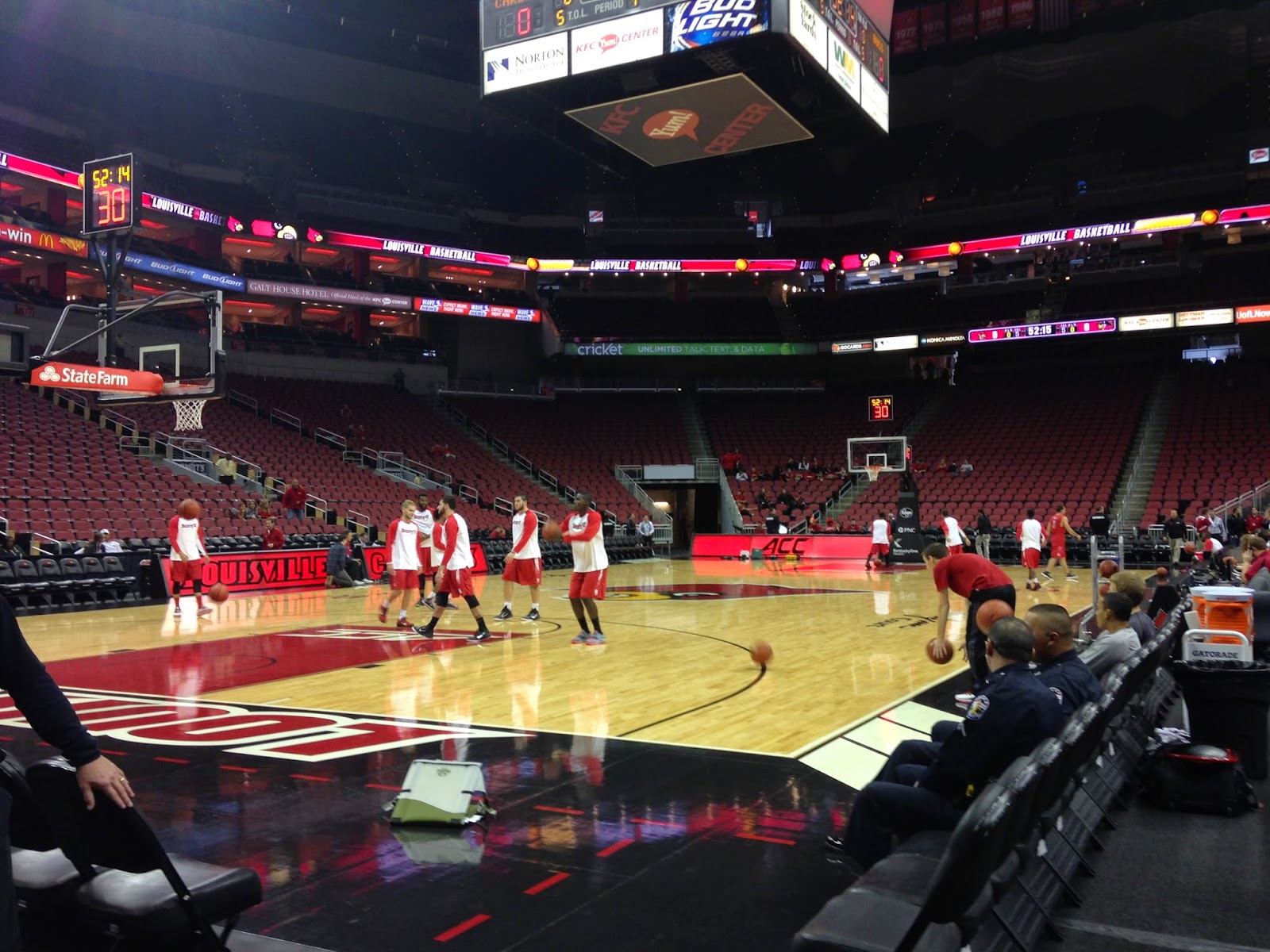
It came out in federal court this week that the Louisville men’s basketball program (allegedly) committed at least one Level 1 violation just weeks after being hammered by the NCAA for committing other Level 1 violations.
Louisville’s 2013 championship banner had only been taken down weeks before assistant coach Kenny Johnson (allegedly) handed a recruit’s dad $1,300 to help pay for rent at the Galt House.
Does Louisville deserve the NCAA death penalty?
Mike DeCourcy of the Sporting News doesn’t think so. Here’s his take:
For starters, there’s almost no one left at Louisville to “execute.” Louisville has a new president, a new athletic director, a new head basketball coach, new assistant coaches and mostly new players. The scope of these two cases was spread over much of this decade, during which Chris Mack was head coach of the Xavier Musketeers and new AD Vince Tyra was operating partner at Southfield Capital, a private equity firm. They are in place now ostensibly to clean up the mess that became of the department and basketball program.
If there is no basketball program, well, that would be more difficult to manage.
The NCAA also would need to be careful about engendering another legal fight were it to assess another season-long or multi-season ban. Not only does defending against lawsuits cost money, as we learned this week in the case of former Southern California football assistant Todd McNair, losing can undermine the organization’s authority.
A Los Angeles County judge ruled just this week that the NCAA’s “show-cause” penalty against McNair violated California law, declaring it represented an “unlawful restraint” that hindered him from gaining employment in college coaching.
The assessment of the death penalty has the potential to interfere with many businesses related to college athletics, directly and tangentially, and it is likely the NCAA would have to defend itself against multiple cases were it to order Louisville to cease fielding a men’s basketball team for a year or more. There are broadcasts contracts in which U of L is engaged, and there may be deals arranged for outside tournaments and events. There is the commitment to play home games at the city’s KFC Yum! Center, an arena that already has fiscal issues even with roughly 20 dates a year from its primary tenant.
